The US-Iran war threatens to trigger a direct economic confrontation between Washington and Beijing as President Trump uses the threat of massive trade penalties—and the promise of cheap crude oil—to isolate Tehran.
 Sseema Giill
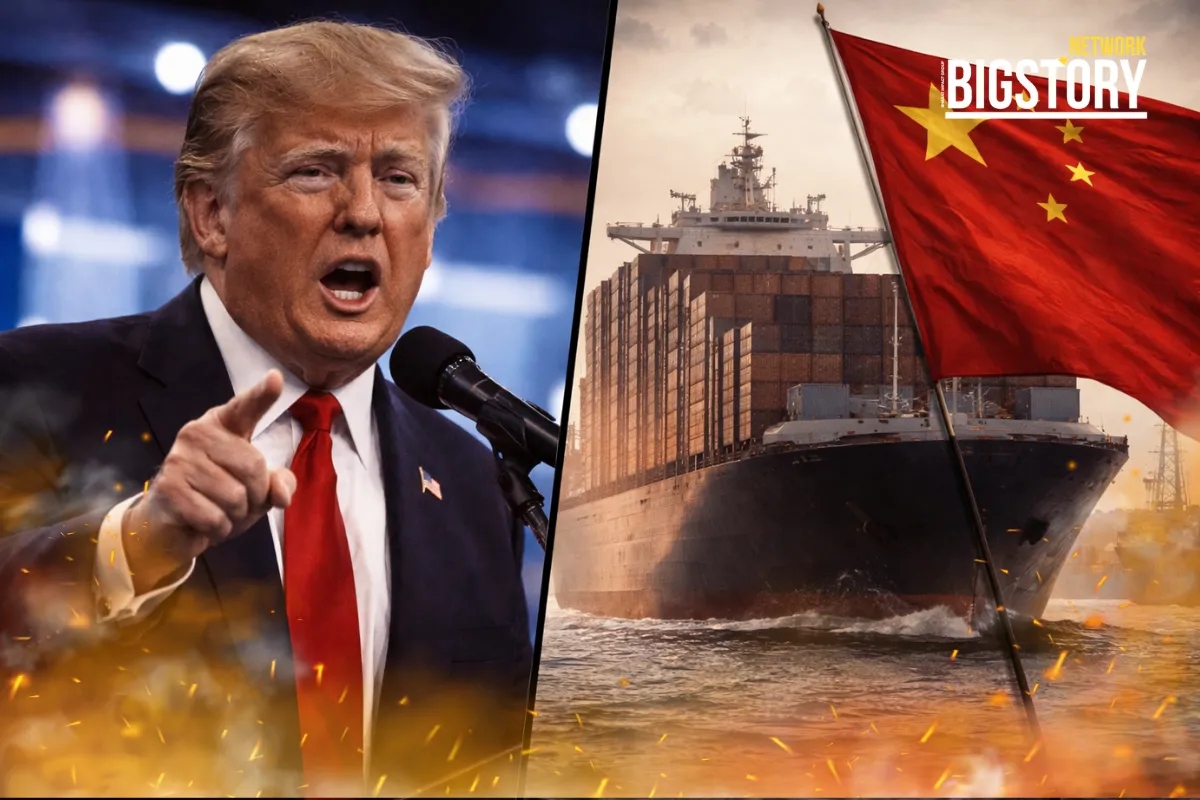
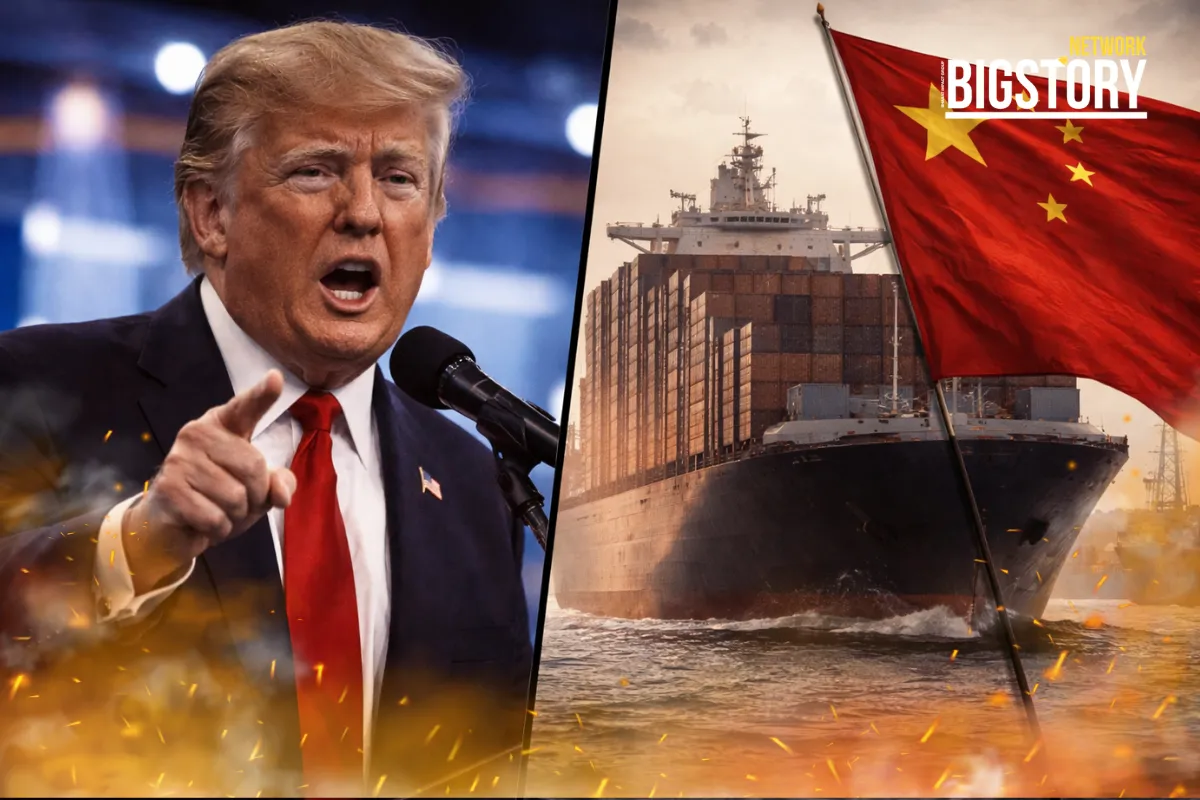
The escalating US-Iran war is rapidly expanding beyond the Middle East, now threatening to trigger a massive, direct economic confrontation between Washington and Beijing. Over the weekend of April 12, 2026, US President Donald Trump issued a fierce warning to China: if Beijing is caught supplying weapons to Iran, the US will immediately slap a staggering 50% tariff on all Chinese goods.
During an interview on Fox News' Sunday Morning Futures with Maria Bartiromo, President Trump explicitly confirmed that his recent warnings to penalize any nation aiding Iran's military apply directly to Beijing.
"If we catch them doing that, they get a 50 percent tariff, which is a staggering, that's a staggering amount," Trump stated during the broadcast.
The President's remarks were a direct response to a CNN report citing fresh US intelligence assessments. According to the intel, China is allegedly preparing to secretly ship advanced air defense systems—specifically shoulder-fired anti-air missiles (MANPADS)—to Iran. These weapons pose a highly lethal threat to low-flying US and Israeli military aircraft, and sources indicate Beijing may attempt to route them through third countries to mask their true origin.
The Chinese Embassy in Washington completely rejected the claims, issuing a statement denying that Beijing has ever provided weapons to any party in the conflict. Chinese officials urged the US to stop "engaging in sensationalism" and fulfill its international obligations to de-escalate the crisis.
Trump did not just rely on the threat of economic penalties; he also offered an unprecedented geopolitical carrot to pull Beijing away from Tehran. Acknowledging China's massive reliance on Iranian crude oil to power its economy, Trump publicly offered to supply China with deeply discounted petroleum from the United States or Venezuela.
Noting that the US is now quasi-operating Venezuela's oil industry after effectively seizing control following the ousting of President Nicolas Maduro earlier this year, Trump made a blunt pitch to Chinese leadership.
"China can send their ships to us, to Venezuela," Trump declared. "We have a lot of overcapacity, and we'll probably sell [oil] for even less money [than Iran]."
While global markets are immediately panicking over the prospect of a renewed trade war, the "Missed Angle" in Trump's 50% tariff threat is that it is currently legally precarious.
In February 2026, the US Supreme Court explicitly struck down Trump's use of emergency laws to impose sweeping global tariffs (which had briefly pushed tariffs on China up to an unprecedented 125%). The Court severely limited the President's ability to weaponize the International Emergency Economic Powers Act (IEEPA) without congressional approval.
If Trump actually attempts to enact this 50% penalty via executive order tomorrow, it will immediately trigger a massive constitutional crisis between the White House and the federal courts. He would be doing so right in the middle of an active Middle Eastern war, and just weeks before his highly anticipated bilateral summit with Chinese President Xi Jinping.
News & Wire Coverage:
 Exclusive Content




Sign up for the Daily newsletter to get your biggest stories, handpicked for you each day.



 Trending Now! in last 24hrs